Ming Feng Schnorr
Mr. Rowley
Advanced World Studies
1 December 2011
United States and China:
Relationship Issues
Even though China has done many questionable acts, even towards its own people, the United States must remain in a good connection with China because without their trade with the U.S. then countless products will either become unavailable or harder to obtain.
The amount of items that gets exported from China to the United States is enormous. Trade to China is also very important too. Everyone knows that a lot to most of the items that people buy from the store has some relation to China. China is important to the U.S. because products that comes from China is made more cheaply because of the people that get paid less for the work. If there was no relations with China then many products’ prices would go up very much. If we stopped relations with China they could black mail the U.S. because they owe them millions of dollars.
The Chinese have recently adapted the policy of foreign trades with other countries. One of these countries along with many others include the United States. Before Deng Xiaoping was in power there was a Communist leader named Mao Zedong. He gained power around the 1930’s when he led his group of Communist followers away from the Nationalist forces. During his first decade or so there was a civil war between the Communists and Nationalist. Eventually the Communist party won and gained control of China. The Nationalist party was more open to communications and relationships with foreign countries. With Mao Zedong in charge he made foreign contact less common and let women have somewhat equal rights.
After Mao died in 1976, Deng Xiaoping another Communist took power. The country was in a lot better condition economically then before but politically not too much change. He made changes in farming, industry, science, technology, and defense. Most importantly in the eyes of the outside world, Deng promoted foreign trade and more contact with foreign nations. The slideshow says in multiple slides that foreign relations and trade improved. Without Deng foreign trade would not have been as good as it was.
The evil part of the relationship that comes in the relationship with China. Having a relationship with China means that the United States accepts everything that China does and their rules. The problem with that is that China has a different way of handling things that other countries see odd. One of these oddities is China’s human rights violations. Human rights are not confined to just one country, so that means that what a group sees as wrong than other countries in that group need to see that as wrong too. These violations include freedom of expression, prisoners and criminals are tortured. Others are a lot of trials are uncommon, there is a high rate of death penalty, and that there is a one child policy.
The events of Tiananmen Square prove the evils faced with a relationship with China. There was a very large amount of students and various other groups the meet up in the Tiananmen Square in Beijing. At the peak of its numbers there was over 1.2 million people protesting there. They were there because they wanted Democracy and better conditions at their colleges. At one point they would strike by not eating, saying that until their demands are met they would starve to prove their point. Deng didn’t do anything to stop the hunger strikers from going to the hospital for medical reasons. When the government thought that the protesters were getting out of hand they decided to put the city into martial law. A bit later the government had to send in military troops and tanks into Beijing. The people that got in the way would be shot instead of detained. The re inforcers were not using riot control weapons but instead used machine guns that use bullets that are usually used for anti-aircraft weapons. The would fire into the crowds killing innocent people. The amount of people that died were in the high thousands. The killing of innocent people showed the evils of China’s government.
In conclusion even though China has done many wrongs in their past, the U.S. as a country must have good relations with China for their trade and both of their economies.
Friday, December 2, 2011

Wednesday, November 9, 2011
Caste System in India
Question: Discuss the caste system in terms of it's justification by the Brahmins, and the impact on the Dalits.
The caste system is justified by the Brahmins because they think that if the Dalits' family line do the same exact job throughout history then the kids will automatically know how to do the job and they wouldn't know what else to do. Their biggest justification is that their holy religious book says that the country must follow those rules and they can not change. The Brahmins also say that the system makes sure that everyone has a job, they also say that the Dalits are okay with this.
The impact on the Dalits is received in many ways. One of the ways is that anyone that is a Dalits cannot really socialize with higher classes because they will pollute the higher class. In public places owned by a higher class, Dalits must remove their shoes or they will get beat up, also in parts of town where only higher classes live. Kids that go to school that are Dalit have to clean bathrooms instead of learning. If a Dalits father or mother was a sweeper than that child must be a sweeper and his child and his child and so on forever. Basically in the family line they can not change jobs. Dalits also cannot move up a class, making them suffer the rest of their life as a Dalit. The caste system is not a fair way to get jobs done because there's only one class that does all the dirty work and they have no choice but to do it.
Wednesday, October 5, 2011
View on Tensions Part 2
What sources of tension, new or old, in the Middle East are revealed by the film?
Censorship of media in the Middle East is a very big deal. The authorities have been hammering down on media coverage in Bahrain. The Arab Spring is the rebirth of the Middle East countries, its just what the Muslims called. A lot of people protest publicly against the dictators and the authorities shoot at them. If the U.S. likes the dictator of a country then we don’t get involved in the revolt of that dictator and if the U.S. don’t like the dictator then we get very involved in the spread of democracy in that country. The people of the country don’t like that because if we like the dictator than we don’t do anything and they want democracy. The U.S. wants to use the best policy to spread Democracy in that country. Saudi Arabia is the best ally of the U.S. in the Middle East. Bahrain contains an important U.S. naval base, that is one reason why U.S. isn’t helping as much with the rebels. Bahrain is a good place because of all the oil that passes through it, hence why we want military there, they are near Saudi Arabia. Saudi Arabia sent troops to Bahrain to help the government, which caused some discussion. There is a conflict between Islam groups between Sunni vs. Shia/Shiite. The Sunni based government are destroying some Muslim Mosque mostly Shiite Mosque. The police are taking people away and the survivors can’t say anything about it because they will be taken away too, even when the U.S. is there because they don’t do anything either. There are protest happening in Saudi Arabia now but we aren’t going to help there either because we love their oil. Our interest in countries of the Middle East really depends on what the other country has to offer us, mostly oil.
Monday, October 3, 2011
Video on New Stuff Tensions Part 1
What sources of tension, new and old, in the Middle East are revealed by the film?
Sources of tension in the Middle East is one is that Qaddiffi is attacking and killing cities and people. When the U.S. intervened with Libya and other countries this caused more conflict, and might of actually killed more people then it saved. Qaddiffi has military support but the rebels who we are rooting for is really only a militia. The rebels do not have great weapons and only have weapons from WW2 and from some they can steal. The Libyan government and the US government had to discuss if the US got involved than they could work out a deal for crude oil. Another reason why there could be a tension is that Qatar is a major supporter of the rebel forces and the Libyan government does not like that. They don’t think it’s right because the rebels don’t own the oil and they do not have the right to sell the crude oil. The rebels find ways to produce oil and sell the oil through the oil ships in a way that is not legal. A council member even confirmed that the rebels are making at least 100,000 barrels a day of oil. According to the video the U.S. might not even know everything about the people that they are supporting. The United States should not intervene because it is none of our business. The side that we are supporting does not have very good experience, the rebels are very young, and they do not have a lot of fire power.
Sources of tension in the Middle East is one is that Qaddiffi is attacking and killing cities and people. When the U.S. intervened with Libya and other countries this caused more conflict, and might of actually killed more people then it saved. Qaddiffi has military support but the rebels who we are rooting for is really only a militia. The rebels do not have great weapons and only have weapons from WW2 and from some they can steal. The Libyan government and the US government had to discuss if the US got involved than they could work out a deal for crude oil. Another reason why there could be a tension is that Qatar is a major supporter of the rebel forces and the Libyan government does not like that. They don’t think it’s right because the rebels don’t own the oil and they do not have the right to sell the crude oil. The rebels find ways to produce oil and sell the oil through the oil ships in a way that is not legal. A council member even confirmed that the rebels are making at least 100,000 barrels a day of oil. According to the video the U.S. might not even know everything about the people that they are supporting. The United States should not intervene because it is none of our business. The side that we are supporting does not have very good experience, the rebels are very young, and they do not have a lot of fire power.
Sunday, October 2, 2011
Balance in the Middle East
Based on your research, is there a balance of wealth in the Middle East? What countries do you think have the highest standard of living? How might your findings illustrate a source of conflict in the region?
Based on my research there is no where near a balance of wealth in the Middle East. I think the countries that have the highest standard of living are Kuwait with a $23,423 GNP per capita, Saudi Arabia with $11,764, and Oman with $8,999. I think that these countries are typically smaller and easier to control. My findings might illustrate a source of conflict because people that are in a poor country would attack or harm other countries because of jealousy. Or maybe the richer country would attack the smaller country because it would be a cheap win. More reasons that the poor countries would attack the rich is that they would know they have a lot of natural resources.
Based on my research there is no where near a balance of wealth in the Middle East. I think the countries that have the highest standard of living are Kuwait with a $23,423 GNP per capita, Saudi Arabia with $11,764, and Oman with $8,999. I think that these countries are typically smaller and easier to control. My findings might illustrate a source of conflict because people that are in a poor country would attack or harm other countries because of jealousy. Or maybe the richer country would attack the smaller country because it would be a cheap win. More reasons that the poor countries would attack the rich is that they would know they have a lot of natural resources.
Wednesday, September 28, 2011
Conflict Between Jews and Muslim
2. The causes of the conflict between Jews and Arabs have many causes. The biggest reason why they are fighting is because they each want to control Jerusalem. The Jews want it because it contains the Dome of the Rock were Abraham sacrificed his son Issac. It is their holy city, and only true capital. Muslims want it because its where Mohammad ascended, in the Dome of the Rock. The conflict hasn't just started over night it's been going on for centuries, but wars against it that have been greatly recorded and are close by are the 1948, 1956, 1967, and 1973. King Soloman built a temple that was destroyed, rebuilt, then destroyed, he was on the Jews side. I think that Jerusalem should be handed over completely to the Jews. I have many reasons mainly is that they have history there like over 3,300 years and it's the only place that they can control. Arabs already have so much land, and their capital of Mecca. They just want it for political reasons, they don't really care about the history of the place. I bet that if they did have control over it they would order all the Jewish holy sites to be destroyed, not caring about the history or significance. Arabs have attacked Israel at least 4 times and Israel has won, they have been nice enough to not keep land from the war, so the Arabs should repay them by giving the Jews just this one city, where they can pray in peace. Of course Muslims can still go to their holy places as long as they don't disrupt anything. But if they do come then they shouldn't be able to hold any political positions. This is just my thoughts anyways, probably I'm wrong in some of my thoughts or inferences but they all make sense.
Monday, September 26, 2011
Global Connections
The Country of Yemen
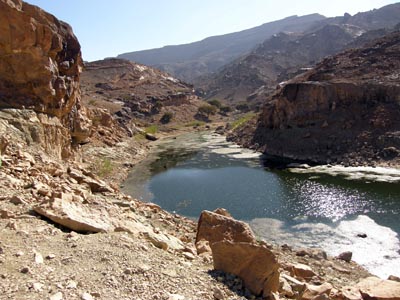
1. Describe the country’s physical geography (terrain). Provide pictures, if available.
It is a narrow plain with trapezoid topped hills, it has rough mountains, the desert upland plains are split in half. It is part of the Arabian Peninsula where it is all desert. It has an area of 527, 968 sq km.

http://images.huffingtonpost.com/2010-01-10-YemeniterrainidealfortourismandterrorismAbuFadil.jpg
2. What is the climate? Note: Climate can range across regions.
The climate is desert climate, it is hot and humid near the west coast. In the western mountains they experience seasonal monsoons, and in the east it is really hot, dry and harsh.
3. Does this country have a fresh water supply?
It does have a fresh water supply but it is limited, and they don’t have very good ways of transporting water. It has access to a seaport because it is on the Arabian Peninsula. It controls its water source but the sources is limited. The source of water are rivers, and ocean through the process of desalination.
4. What industries does the country support?
The country supports crude oil productions, petroleum refining, cotton textiles, leather goods, food processing, handicrafts, cement, commercial ship repair and natural gas production. The GDP composition by sector for industry is 39%.
5. What international issues is the country currently facing?
The international issues Yemen is facing is that Saudi Arabia has concrete-filled security barriers to discourage illegal border activities. It has refugees from countries mostly Somalia. More international issues is that people trafficking, for sex and labor.
The Country of Yemen
1. Describe the country’s physical geography (terrain). Provide pictures, if available.
It is a narrow plain with trapezoid topped hills, it has rough mountains, the desert upland plains are split in half. It is part of the Arabian Peninsula where it is all desert. It has an area of 527, 968 sq km.
http://images.huffingtonpost.com/2010-01-10-YemeniterrainidealfortourismandterrorismAbuFadil.jpg
2. What is the climate? Note: Climate can range across regions.
The climate is desert climate, it is hot and humid near the west coast. In the western mountains they experience seasonal monsoons, and in the east it is really hot, dry and harsh.
3. Does this country have a fresh water supply?
It does have a fresh water supply but it is limited, and they don’t have very good ways of transporting water. It has access to a seaport because it is on the Arabian Peninsula. It controls its water source but the sources is limited. The source of water are rivers, and ocean through the process of desalination.
4. What industries does the country support?
The country supports crude oil productions, petroleum refining, cotton textiles, leather goods, food processing, handicrafts, cement, commercial ship repair and natural gas production. The GDP composition by sector for industry is 39%.
5. What international issues is the country currently facing?
The international issues Yemen is facing is that Saudi Arabia has concrete-filled security barriers to discourage illegal border activities. It has refugees from countries mostly Somalia. More international issues is that people trafficking, for sex and labor.
What role have natural resources played in the politics and economy of the Middle East?
Water plays a big role in economy because if one country builds a damn upstream of a river another country get less water then before. This causes disputes and arguments about property. Their vast reserves of oil interest many country, mostly European countries and the United States. They divide the land up that's not theirs, to satisfy their growing need for oil. The price of oil has increased causing the cost of land to drill to increase, while western countries pay more for the oil, the Middle East profits more from the oil. Water is only abundant in a few Middle East countries, and most of them rely on other countries to get their water.
Subscribe to:
Posts (Atom)